Intermittent Fasting for Beginners: 16:8, Ketosis, and Autophagy Explained
On this page
Intermittent fasting has gone from a niche experiment to one of the most popular ways to eat — and for good reason: it's simple, it's free, and it changes when you eat rather than forcing a complicated diet. If you're curious but unsure where to start, here's a clear beginner's guide to the fasting windows, what actually happens in your body, and how to make it stick.
What is intermittent fasting?
Intermittent fasting (IF) is an eating pattern that alternates between an eating window and a fasting window. You're not told which foods to eat — you're given a schedule for when to eat them. During the fast you have only water, black coffee, or plain tea; during the window you eat normally. That's the whole idea, and its simplicity is why so many people stick with it.
Popular fasting windows
| Schedule | Fast / eat | Best for |
|---|---|---|
| 12:12 | 12h fast / 12h eat | Complete beginners easing in |
| 14:10 | 14h fast / 10h eat | A gentle first step up |
| 16:8 | 16h fast / 8h eat | The most popular all-rounder |
| 18:6 | 18h fast / 6h eat | Experienced fasters |
| OMAD | 23h fast / 1h eat | Advanced, one meal a day |
What happens in your body
As the hours pass without food, your body moves through a series of stages:
- Fed state (0–4 hours): you're digesting and absorbing your last meal; insulin is high and your body burns the food you just ate.
- Early fasting (4–12 hours): insulin falls and your body starts tapping stored energy (glycogen).
- Fat-burning & ketosis (~14–16 hours): with glycogen running low, your body shifts toward burning fat and producing ketones for fuel.
- Autophagy (deeper into the fast): your cells step up autophagy, a natural "cleanup" process that recycles damaged components. It increases the longer you fast.
These are gradual transitions, and the exact timing depends on your body, your activity, and your last meal — not a stopwatch.
Does it actually help with weight loss?
For a lot of people, yes — but not by magic. A shorter eating window usually means fewer total calories without having to count every bite, and that calorie deficit is what drives weight loss. Fasting is a tool that makes the deficit easier to reach and maintain; it doesn't suspend the laws of energy balance. If you eat the same amount squeezed into 8 hours, you won't lose weight just because you fasted.
How to start (and stick with it)
- Ease in. Begin with 12:12 or 14:10 for a week, then move to 16:8.
- Anchor the fast to sleep. Ending dinner earlier and pushing breakfast later does most of the work while you're asleep.
- Stay hydrated. Water, black coffee, and plain tea keep hunger waves manageable.
- Don't overeat in the window. Fasting only helps if the eating window stays sensible.
- Track your window. Knowing exactly when your fast started and where you are in it is the difference between guessing and staying consistent.
A timer makes it stick
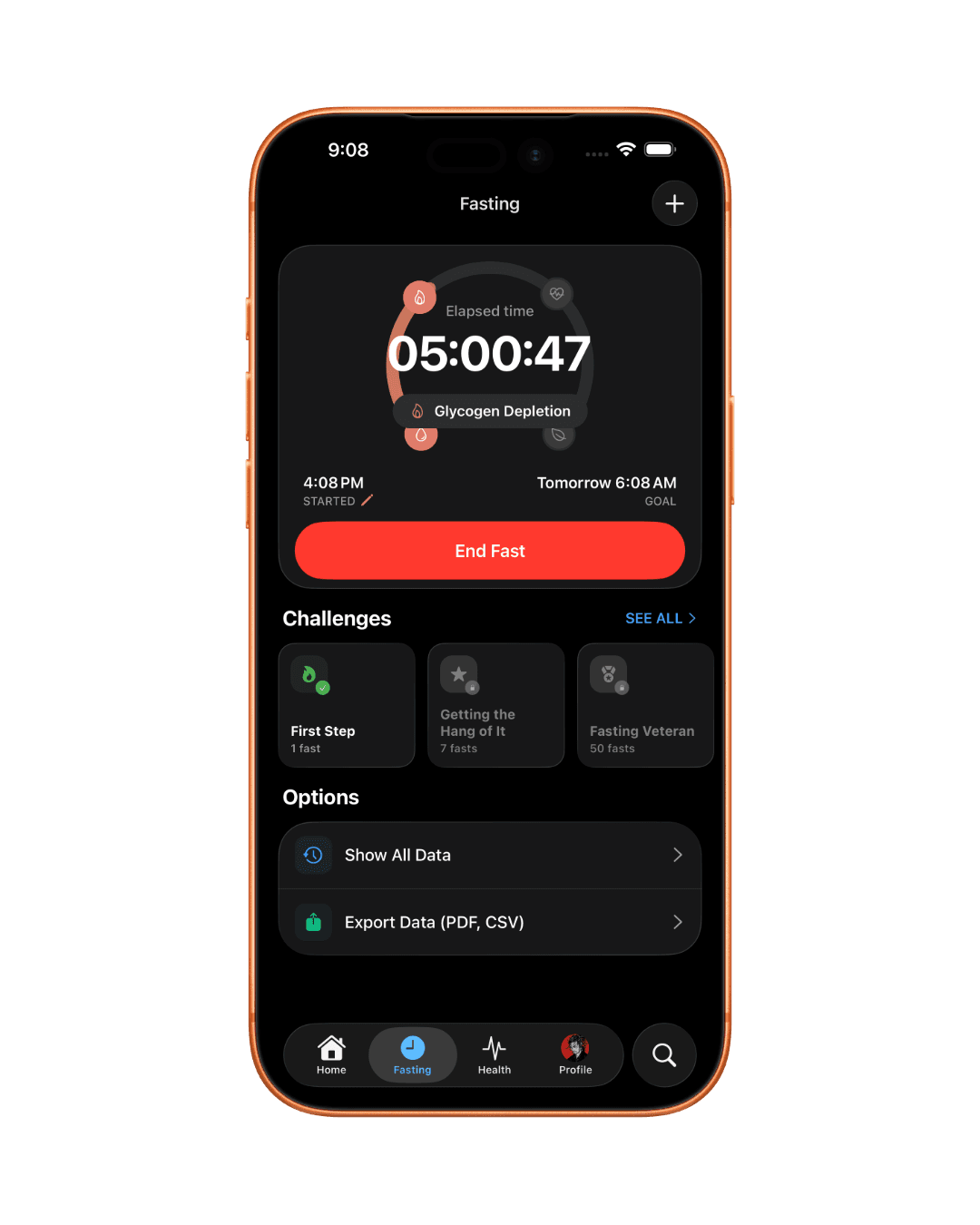
The hardest part of fasting isn't the science — it's knowing where you are in your window and staying consistent day to day. That's where a fasting timer helps: start it when your fast begins and it shows your progress through the stages, including ketosis and autophagy, so you always know exactly where you stand.
Nutix includes a built-in intermittent-fasting timer with ketosis and autophagy stages, and it's free to use — no premium plan required. You can start or end a fast right from your phone or Apple Watch, and log your meals in the same app when your eating window opens, so your fasting and your calories live in one place.
The bottom line
Intermittent fasting works because it's simple: change when you eat, keep your calories reasonable, and let the fasting window do the structuring for you. Start with an easy schedule, build up to 16:8, understand that ketosis and autophagy come gradually as the hours pass, and use a timer to stay consistent. It's one of the most beginner-friendly habits in nutrition — and one of the few that costs nothing to try.
 Nutix
NutixDownload Nutix for free and take control of your nutrition in seconds.


Frequently asked questions
What is intermittent fasting?
What is the 16:8 method?
How long until I reach ketosis and autophagy?
Does intermittent fasting help with weight loss?
Is it normal to feel hungry when starting?
Related articles
Why Am I Gaining Weight in a Calorie Deficit?
Gaining weight while eating in a calorie deficit? It's almost always water, food weight, or a tracking gap — not fat. Here's what's really happening on the scale in 2026, and how to fix it.
Can You Count Calories From a Photo? How AI Food Logging Really Works
AI can count calories from a photo in seconds — but how accurate is it? Here's how photo food logging works, where it's great, and why describing the exact amounts is the more accurate way to log in 2026.
A Calorie Counter That Speaks Your Language — Not Just English
Most calorie trackers are English-first, with everyone else getting a half-translated menu. Nutix speaks 14 languages with real local food databases and photo, voice, and text logging in your language. Here's why that matters in 2026.